The Wessex Royal Line from Cerdic to Alfred: A Beginner's Guide
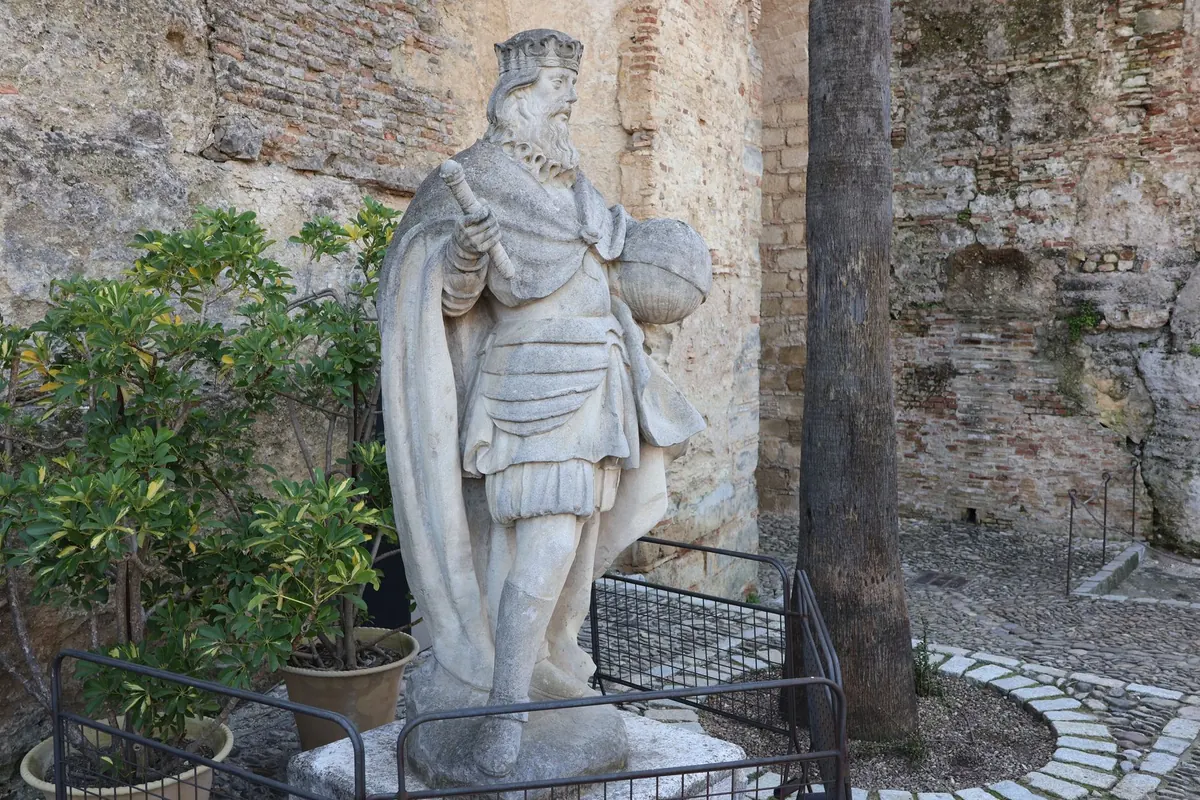
Ask most people to name a king of Wessex and they will say Alfred. Press a little harder and Egbert might surface. Between those two names lie roughly four hundred years, more than twenty kings, and a family that spent much of that time fighting its cousins, the Mercians, and the Vikings, occasionally all at once. What follows is the shape of the line: who ruled, how they were related, and which events actually changed things.
A king-list with a purpose
Almost everything we know about the early West Saxon kings comes from the Anglo-Saxon Chronicle, compiled at Alfred's court in the 890s, and from a companion document known as the West Saxon Genealogical Regnal List. Both were written centuries after the events they describe, by people with an interest in making the line look older, cleaner and more legitimate than it probably was. That does not make them useless. It does mean you should hold the dates loosely.
Two patterns are worth watching from the start. First, succession rarely passed tidily from father to eldest son; brothers, cousins and at least one queen take the throne. Second, the kings were not simply kings of a fixed place called Wessex. Their power grew out of a core territory around Winchester and the upper Thames, and it depended on how many neighbouring peoples they could persuade or force into obedience.
From Cerdic to Ceawlin: the founding generation
The Chronicle has Cerdic landing at Cerdicesora, probably somewhere on Southampton Water, in 495, and beginning to reign in 519. His son Cynric follows, then Ceawlin, who ruled from about 560 to 592. Bede, writing in Northumbria, lists Ceawlin among the southern rulers who held a broad overlordship over other kingdoms — a sign that by the late sixth century Wessex was a serious power rather than a local squabble.
Ceawlin's end is instructive. In 592 he was defeated at Woden's Barrow and driven out by a kinsman named Ceol, and within a few generations the details blur into a tangle of similarly named princes. The royal genealogies trace the family back to Woden himself, which tells you more about eighth- and ninth-century politics than about sixth-century genealogy.
The seventh century: a new faith and an old enemy
Cynegils, who ruled from about 611 to 642, is the first West Saxon king we can call Christian. He was baptised by the missionary Birinus at Dorchester-on-Thames, with Oswald of Northumbria standing as godfather — a ceremony that was as much diplomatic as devotional. His son Cenwalh had a rougher time. He put aside his wife, who happened to be the sister of Penda of Mercia, and Penda promptly drove him out of his kingdom. Cenwalh took refuge in East Anglia, was properly converted there, and returned in 648 to rule for another quarter-century.
After Cenwalh died, his widow Seaxburh held power for a time. She is one of the very few women to appear as a ruler in the regnal list, and her brief appearance is a reminder that the surviving sources were written by men with a particular idea of who ought to reign. Then came Cædwalla and Ine, two of the most consequential kings of the period.
Three kings worth knowing
- Cædwalla (685–688) — a ruthless conqueror who took Sussex and the Isle of Wight, then abdicated, travelled to Rome and was baptised by Pope Sergius before dying shortly afterwards.
- Ine (688–726) — a long, steady reign. His law code is the earliest surviving set of West Saxon laws, and it shows a king arbitrating disputes between freemen, slaves and the Church.
- Cynewulf (757–786) — murdered at Merton by the brother of a man he had deposed. The Chronicle tells the story with unusual detail, including the moment his companions were offered money to surrender and chose to fight instead.
Egbert and the push towards England
For most of the eighth century Wessex sat in Mercia's shadow. Offa of Mercia dictated who married whom, and Beorhtric of Wessex (786–802) married Offa's daughter Eadburh — hardly a sign of independence. Egbert, who took the throne in 802, changed that. Traditionally said to have spent years in exile at the Frankish court, he defeated Mercia at Ellandun in 825 and brought Kent, Surrey, Sussex and Essex under West Saxon control. In 829 he briefly drove the Mercian king Wiglaf out altogether. He was never king of England, but he made sure that whoever eventually was would probably come from his family.
Egbert's son Æthelwulf (839–858) inherited both the enlarged kingdom and the Viking problem. He divided his inheritance among his sons in a way that produced four kings in succession: Æthelbald, Æthelberht, Æthelred, and finally Alfred. Æthelbald even married his father's widow, Judith, a match the Church objected to and that was annulled after his death. The Great Army arrived in 865, while Æthelred was king.
Alfred: the line's most famous king
Alfred came to the throne in 871, in the middle of a war he kept losing. By 878 he was hiding in the Somerset marshes; then he won at Edington, forced the Danish leader Guthrum to accept baptism, and agreed a boundary that left him Wessex and Guthrum the north and east. What followed was the real achievement: a network of fortified burhs placed a day's march apart, a reorganised army and a small fleet, a rewritten law code, and a programme of translating Latin works into English for the benefit of his officials.
He was not king of England — that title belongs to his grandson Æthelstan, who took control of Northumbria in 927 and won at Brunanburh in 937. But Alfred kept Wessex alive, and the Chronicle he commissioned is the reason we can trace the line at all.
Reading the line without losing your place
- Anchor yourself on six names — Cerdic, Ceawlin, Cynegils, Ine, Egbert, Alfred — and fill the gaps later.
- Distrust exact dates before about 600. Treat them as approximate and say so.
- Draw the family tree as you read. Most confusion comes from half-brothers and cousins sharing similar names, and a simple diagram fixes it faster than re-reading.
- Follow the landscape. Winchester, Athelney, Edington and the Wiltshire downs make far more sense once you have seen how close together they are.
- Check the source. When a chronicler praises a king's ancestry or his piety, ask who was paying.
Once those six names sit comfortably, the rest of the line becomes a story rather than a list of strangers.