How to Trace Wessex Ancestors Using Parish Registers: A Beginner's Guide
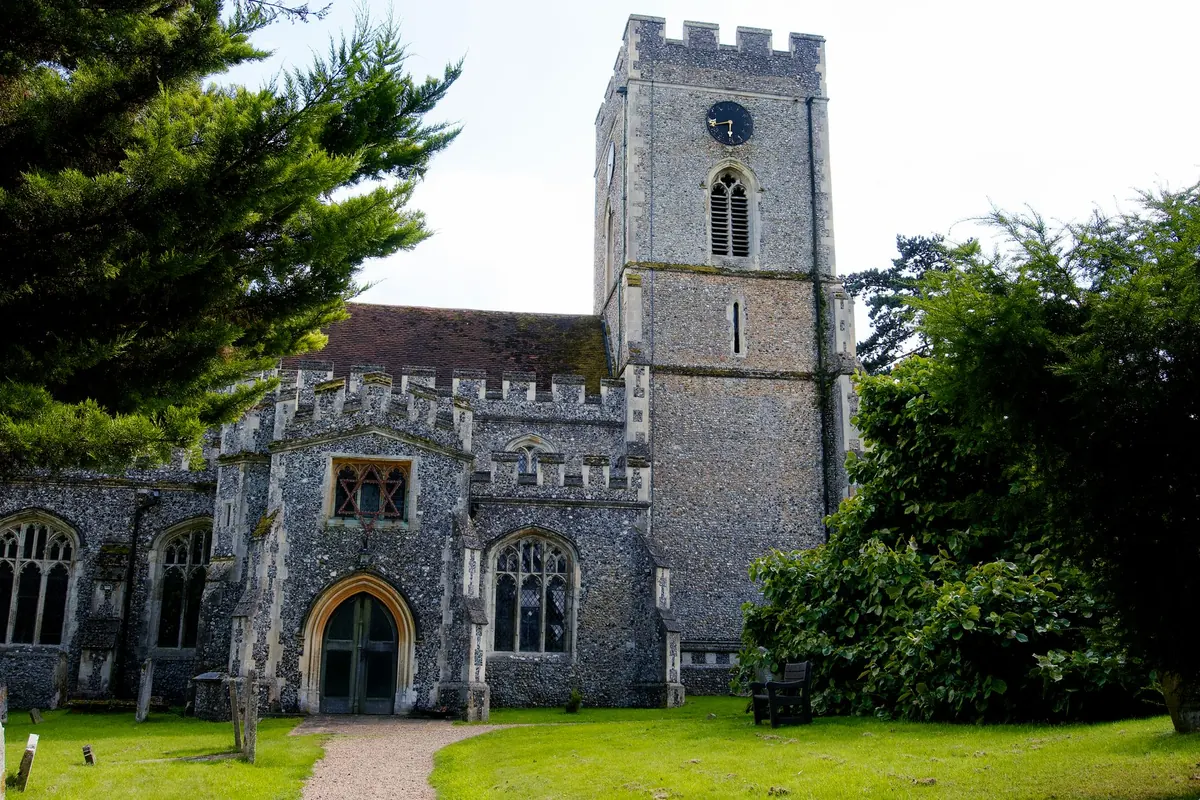
Parish registers are the closest thing English family history has to a time machine. Before civil registration began in July 1837 — and in many places long after it — the parish church was the only institution that recorded ordinary people by name. A few lines of ink for a baptism, a marriage, a burial. For anyone with roots in Hampshire, Wiltshire, Dorset, Somerset or Berkshire, these slim volumes are usually where a family line is either found or lost.
What Parish Registers Actually Record
Every Anglican parish kept three series: baptisms, marriages and burials. Note the first word carefully. A baptism date is not a birth date, though the two are often only days apart. The registers also survive unevenly, and a handful of dates explain most of the gaps you will encounter.
- 1538: Thomas Cromwell ordered every parish to record baptisms, marriages and burials. Many earliest registers are lost or damaged.
- 1598: Registers were to be kept on parchment and copies sent annually to the bishop. These copies, the Bishop's Transcripts, sometimes survive where the original does not.
- 1640s–1660: Civil War and the Interregnum disrupted record-keeping badly. Expect holes.
- 1754: Hardwicke's Marriage Act introduced separate, standard marriage registers with witnesses and signatures.
- 1813: Rose's Act brought printed forms for baptisms and burials, so entries become far more informative.
Before 1813, a baptism usually names the father and gives the child's name, but not the mother. Burial entries often give no age and may describe the deceased only as "son of John". After 1813 you get addresses, occupations, ages and, for burials, the age at death — which can point you towards a birth year.
Work Backwards to a Place Before You Search
Parish registers are organised by parish, so you need a parish name, not just a county. Wessex counties are large. "Somerset" is not a searchable place.
Start from what you know and move backwards in time. Civil registration records from 1837 onwards, and census returns from 1841, both give a place of birth or residence. Those two sources will usually hand you a village. Then check whether that village had its own church or was a chapel of ease attached to a larger parish — a common situation in the downs and the New Forest. Hamlet ancestors may appear in the registers of the neighbouring parish.
Boundaries matter too. County lines shifted, and parishes near the edges of Dorset, Somerset, Wiltshire and Hampshire sometimes served communities on the "wrong" side of the border. If a family vanishes, look in the adjacent county before assuming a move.
Where the Records Are Now
Most original registers sit in county record offices, with microfilm or digital copies available elsewhere. In this region the main repositories are the Hampshire Record Office in Winchester, the Wiltshire and Swindon History Centre in Chippenham, the Dorset History Centre in Dorchester, the Somerset Heritage Centre in Taunton, and the Berkshire Record Office in Reading. Several offer free on-site access and paid copying services.
Online, the biggest collections are on Ancestry and Findmypast, with substantial holdings on FamilySearch. FreeREG offers free transcriptions of many parishes, and GENUKI is the best free index of what survives where. Phillimore's printed transcripts, Boyd's Marriage Index and the National Burial Index are all worth checking, often available through libraries or family history societies.
Reading an Entry — and the Traps in It
Handwriting and language
Early entries may be in Latin, with names latinised: Jacobus for James, Maria for Mary. From the sixteenth to the eighteenth century, most registers were written in secretary hand, where a looped "e" and a long "s" can turn a familiar surname into a puzzle. Read the whole page, not just your ancestor's line — the clerk's habits become readable once you have seen twenty entries.
Dates and details that mislead
Before 1752 the year began on 25 March, so an event in January 1700 might be recorded in the register for 1699. Transcribers and databases handle this inconsistently, which is a frequent cause of "missing" baptisms.
Also remember that not everyone was Anglican. Nonconformist and Catholic families may appear in parish registers only occasionally, and after 1754 marriages generally had to take place in an Anglican church. If a marriage is missing entirely, look for a licence or a nonconformist chapel.
A Simple Research Sequence
- Write down every fact you already have, with the source for each one.
- Use civil registration or a census to identify a village.
- Check GENUKI and the county archive catalogue for what registers survive for that parish.
- Search baptism registers for a likely birth year, allowing a year or two either side.
- Look for siblings — they confirm you have the right family.
- Find the parents' marriage, then repeat the process one generation back.
- Record every entry you find, including ones that turn out to be wrong.
Mistakes That Cost Time
Assuming a baptism year is a birth year. Trusting an online index without viewing the image — transcriptions drop occupations and notes, and misread surnames. Skipping Bishop's Transcripts when a register has a gap. And giving up too early on a spelling: Wessex surnames shift constantly between forms, and a search for "Fry" may need to try "Frey", "Free" and "Vry".
Getting Help, and Keeping Going
Local knowledge shortens this work enormously. Family history societies for Hampshire, Wiltshire, Somerset and Dorset, and Berkshire, publish transcripts, run beginners' sessions and answer queries from members. Archive staff will explain their catalogues if you ask. Take a notebook or a spreadsheet to every search and record the parish, date and reference for each entry you find; nothing slows a project more than re-finding the same baptism twice.
Parish registers rarely answer every question, but they answer enough to keep you moving — one village, one generation, one line of ink at a time.
Photo: Mike Bird / Pexels